
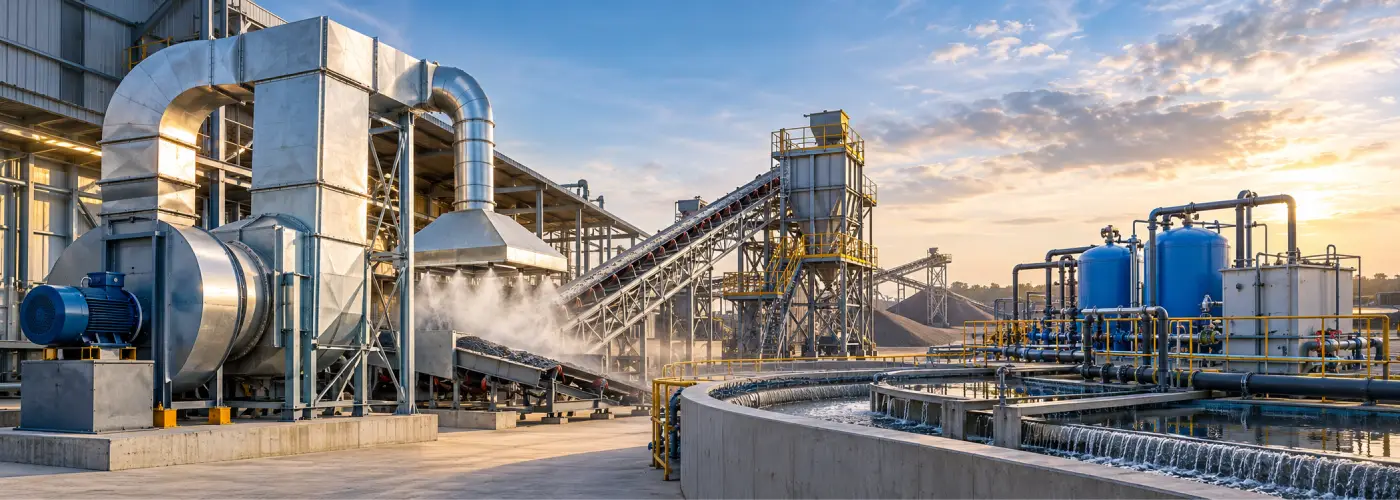
Pneumatic Conveying Systems Manufacturer
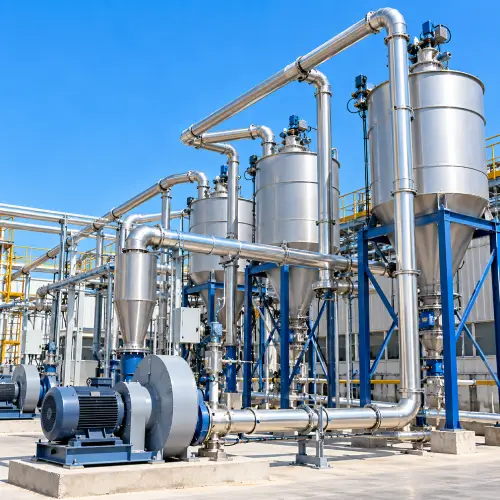
DSP Equipment is a manufacturer of Pneumatic Conveying Systems designed for the enclosed movement of powders, granules and other dry bulk materials within industrial plants. Instead of depending entirely on conventional mechanical conveyors, pneumatic conveying uses a controlled flow of air or gas to transport material through a dedicated pipeline.
The system can be designed for transferring materials between hoppers, silos, storage vessels, process machines, weighing units and packaging lines. DSP Equipment develops the conveying arrangement according to material properties, required capacity, conveying distance, pipeline routing and plant conditions. With solutions for industrial requirements across Kolkata, Bihar, Jharkhand, Odisha, Chhattisgarh and Assam, DSP Equipment focuses on practical system design, reliable material movement and easy integration with existing production facilities.
A Smarter Approach to Industrial Bulk Material Movement
Handling powders and granular products manually or through multiple mechanical transfer stages can make a production line more complicated. A pneumatic conveying system provides an alternative by creating a controlled material-transfer path between different points in the plant.
Material is introduced into the conveying line and carried by moving air through the pipeline. At the destination, a separator, filter, cyclone or receiving vessel can separate the product from the conveying air.
A typical arrangement can include:
Material Storage → Feeding Arrangement → Air Injection → Conveying Pipeline → Receiving Equipment → Product Discharge
The actual arrangement varies according to the product being conveyed and the required production rate.
What Is a Pneumatic Conveying System?
A Pneumatic Conveying System is an engineered bulk-material handling system in which air or another suitable gas acts as the conveying medium.
Depending on the application, materials can be moved using different operating principles, including:
- Lean Phase Conveying
Material is carried at relatively high air velocity with a comparatively lower solids concentration. It is commonly considered for continuous movement of suitable powders and granules.
- Dense Phase Conveying
Material is transported at lower velocity with a higher concentration of solids in the conveying line. This configuration can be advantageous for suitable materials where controlled and gentler transfer is required.
- Pressure Conveying
A positive-pressure air source pushes material from the feeding point toward the destination.
- Vacuum Conveying
A vacuum arrangement draws material toward the receiving point and can be useful for selected applications where controlled product pickup is required.
The appropriate method should be selected after evaluating the material and process requirements rather than simply choosing one system for every application.
Engineered Around Your Material
There is no universal pneumatic conveying design suitable for every product. Bulk density, particle size, particle shape, moisture, temperature, abrasiveness, flowability and material sensitivity can all influence system selection.
DSP Equipment can consider these factors while developing the conveying arrangement.
Main Equipment Used in Pneumatic Conveying
A complete pneumatic conveying installation consists of several coordinated components rather than a single machine.
- Feeding Equipment
Rotary airlocks, screw feeders, pressure vessels or other feeding arrangements introduce material into the conveying line at a controlled rate.
- Air Supply Unit
A blower, compressor or other suitable air source generates the required conveying airflow or pressure.
- Conveying Pipeline
The pipeline forms the primary route through which the material travels. Pipe diameter and routing are selected according to system calculations.
- Bends and Diverters
Specially designed bends and directional components allow the pipeline to navigate the plant layout.
- Receiving Equipment
At the destination, the conveyed material can enter a hopper, silo, cyclone, filter receiver or process machine.
- Filtration Arrangement
Filters or separators can be incorporated to separate conveying air from the transported material.
- Control & Instrumentation
Pressure indicators, valves, sensors and control panels help monitor and regulate system operation.
Technical Specifications
Parameter | Typical Configuration |
System Type | Pneumatic Bulk Material Conveying |
Conveying Medium | Air / Suitable Gas |
Conveying Mode | Lean Phase / Dense Phase / Pressure / Vacuum |
Material | Powders, Granules & Dry Bulk Solids |
Conveying Capacity | Application-specific |
Pipeline Diameter | Calculated according to material and capacity |
Conveying Distance | Project-specific |
Air Source | Blower / Compressor / Vacuum Source |
Feeding Arrangement | Rotary Valve / Screw Feeder / Pressure Vessel |
Pipeline Material | MS / SS / Application-Specific |
Receiving Equipment | Hopper / Silo / Cyclone / Filter Receiver |
Control System | Manual / Automatic |
Installation | Indoor / Outdoor |
Configuration | Single Point / Multi-Point Conveying |
Final specifications are established after reviewing the material, required throughput, conveying route and operating conditions.
Material Characteristics Considered During System Design
- Bulk density
- Particle size distribution
- Moisture content
- Product temperature
- Flowability
- Abrasiveness
- Fragility
- Hygroscopic nature
- Required conveying rate
- Material degradation sensitivity
These parameters help determine the appropriate conveying mode, pipeline diameter, air requirement, feeding equipment and receiving arrangement.
Quality and Engineering Considerations
A reliable pneumatic conveying installation depends on more than simply moving material from one location to another. Correct sizing of the air source, pipeline, feeder and receiving equipment is important for stable operation.
DSP Equipment considers practical factors such as:
- Pressure drop through the pipeline
- Air velocity
- Material loading
- Pipeline length
- Number of bends
- Vertical elevation
- Feeding consistency
- Receiving capacity
- Filter requirement
- Maintenance accessibility
This application-based approach helps create a conveying arrangement suited to the actual production environment.
Performance Benefits for Industrial Operations
- Enclosed Transfer
The material remains within a pipeline during transportation, creating a controlled transfer route.
- Flexible Installation
Pipelines can be adapted to many plant layouts and can connect equipment located at different elevations.
- Reduced Manual Handling
Automated conveying reduces the need to manually transfer bulk powders and granules between process stages.
- Integration with Automation
The conveying system can be linked with process controls, level sensors, valves and automated feeding equipment.
- Multiple Receiving Locations
With suitable valves and pipeline arrangements, a conveying system can be configured to supply more than one destination.
- Cleaner Material Handling
An enclosed conveying route can help minimise open handling of dry powders and particulate materials.
Where Pneumatic Conveying Systems Are Used
Pneumatic conveying has applications across many industries where dry bulk materials need to be transferred between process stages.
- Cement & Construction Material Industry
Used for conveying suitable powders, additives and other dry bulk materials between storage and processing equipment.
- Chemical Industry
Suitable for controlled transportation of compatible powders and granular chemicals.
- Pharmaceutical Industry
Can be integrated into material-handling systems for suitable powders and ingredients where enclosed transfer is required.
- Food Processing
Used for moving selected dry ingredients, powders and granular products.
- Plastic & Polymer Industry
Suitable for transferring compatible plastic granules and powdered materials.
- Fertilizer Industry
Can be incorporated for movement of suitable fertilizer powders and granules.
- Mineral Processing
Used for transporting selected dry mineral products and process materials.
- Power & Utility Plants
Can be incorporated into selected ash and dry-material handling applications.
- Ceramic & Refractory Industry
Suitable for conveying compatible powdered raw materials and additives.
- General Manufacturing
Can connect storage, processing, weighing and packaging equipment within an automated material-handling arrangement.
Pneumatic Conveying Systems for Different Industrial Requirements
DSP Equipment can develop systems for different production capacities and plant configurations. A small process line may require a straightforward point-to-point conveying arrangement, while a large production facility may require multiple feeders, pipelines, receiving points and automated controls.
The system can therefore be configured as:
- Point-to-point conveying systems
- Centralised material conveying systems
- Multi-destination conveying systems
- Silo-to-process conveying systems
- Process-to-storage conveying systems
- Automated material transfer systems
This flexibility allows the equipment to be incorporated into both new production lines and selected existing installations.
Why Choose DSP Equipment?
DSP Equipment approaches pneumatic conveying as a complete system-engineering requirement. The focus is not only on the blower or pipeline but on how the feeder, air source, pipeline, bends, separator, receiving equipment and controls work together.
Reasons to Partner with DSP Equipment
- Application-specific system design
- Custom pipeline configuration
- Selection of appropriate conveying technology
- Industrial-grade fabrication
- Integration with existing process equipment
- Suitable feeding and receiving arrangements
- Manual and automatic control options
- Support for different powder and granular materials
- Solutions for varied plant layouts
- Industrial service coverage across Kolkata, Bihar, Jharkhand, Odisha, Chhattisgarh and Assam
Why Industries Choose Pneumatic Material Transfer
- For many industries, the key requirement is not merely transportation but controlled movement of bulk material between interconnected processes.
- A properly designed pneumatic conveying system can connect storage and production equipment while reducing open material movement, providing flexible routing and supporting automated handling.
- The technology is particularly useful where the plant requires enclosed transfer, elevated conveying routes, multiple process connections or reduced manual material handling.
Frequently Asked Questions
Suitable dry powders, granules and bulk solids can be transported pneumatically. The material's flowability, density, moisture, particle size and abrasiveness should be evaluated before system selection.
Lean phase generally transports material at higher air velocity and lower solids concentration, while dense phase uses lower velocity and a higher solids concentration. The appropriate method depends on the material and application.
Yes. Pipeline size, conveying method, feeder, air source, receiving equipment and controls can be selected according to project requirements.
Yes. Properly designed pipelines, diverters and control valves can allow one system to serve multiple receiving or discharge points.
Contact DSP Equipment for Pneumatic Conveying Systems
If you are looking for a Pneumatic Conveying Systems Manufacturer in Kolkata, Bihar, Jharkhand, Odisha, Chhattisgarh and Assam, DSP Equipment can develop an industrial conveying solution according to your material and process requirements. Share details such as material name, required conveying capacity, approximate distance, vertical lift, number of receiving points and existing plant layout to discuss a suitable pneumatic conveying system for your application.