
Neem Oil Separation Systems Manufacturer
Product Overview
Neem oil extraction involves separating oil from neem seeds or kernels while managing the remaining solid material and other process residues. Neem Oil Separation Systems are used in neem processing facilities to support the separation, clarification or recovery of oil, depending on the extraction method and the condition of the raw material.
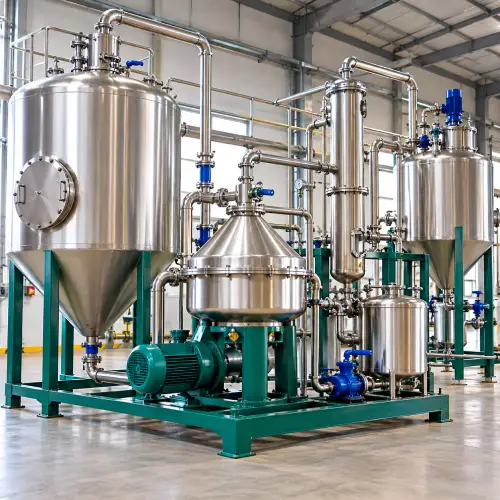
DSP Equipment caters to industrial process equipment requirements for Neem Oil Separation Systems in Kolkata, Bihar, Jharkhand, Odisha, Chhattisgarh and Assam. The system configuration can be selected according to the production scale, oil-bearing feed material, extraction process and desired output quality. Depending on the process, the setup may include filtration units, settling arrangements, separation equipment, transfer pumps and collection tanks.
Key Features of Neem Oil Separation Systems
- Process-Specific Separation: Equipment can be selected according to whether the application involves crude oil clarification, solid-liquid separation or oil recovery.
- Suitable Material Handling: Feed arrangements can be planned for neem oil and associated processing residues.
- Integrated Equipment Layout: Separation units can be connected with extraction, filtration and collection stages.
- Controlled Oil Transfer: Suitable pumps and piping help move oil between different processing stages.
- Adaptable Plant Configuration: Equipment selection can reflect the production capacity and available installation area.
- Convenient Collection: Appropriate storage tanks and outlets help organise recovered oil collection.
- Maintenance Access: A practical layout allows inspection and cleaning of relevant equipment components.
Benefits of an Efficient Neem Oil Separation System
A properly designed separation arrangement helps neem processors organise oil recovery and downstream handling more effectively. The actual benefits depend on the feed material, extraction technique and equipment selected.
- Improved Process Flow: Connects extraction, separation and collection operations in a planned sequence.
- Reduced Unwanted Solids: Suitable clarification or filtration stages can remove suspended seed particles from crude oil.
- Better Batch Management: Helps operators manage incoming material and recovered oil systematically.
- Consistent Processing Conditions: Appropriate process controls can support repeatable operating conditions.
- Reduced Manual Handling: Mechanised transfer and collection can limit unnecessary movement of oil between vessels.
- Production-Line Integration: The system can be planned to work alongside existing neem seed crushing or oil extraction machinery.
Separation Technology and Engineering Considerations
Neem oil separation requirements vary according to the condition of the oil after extraction. Crude neem oil may contain suspended seed particles, moisture and other residues, so the separation method should match the actual contaminants present. DSP Equipment can help industrial buyers evaluate the main equipment requirements for a suitable process arrangement.
System Component | Purpose |
Feed or Collection Tank | Receives crude oil from the extraction stage |
Transfer Pump | Moves oil between process units |
Filtration Unit | Removes suitable suspended solid particles |
Settling Tank | Allows separable solids or water to settle where applicable |
Mechanical Separator | Supports separation when the selected process requires it |
Piping and Valves | Regulate transfer between equipment stages |
Oil Storage Tank | Collects processed or clarified oil |
Monitoring Instruments | Help monitor relevant operating parameters |
The final arrangement depends on whether the requirement is crude oil clarification, moisture separation, solid-liquid separation or another specific recovery process. These functions may require different equipment.
Common Applications of Neem Oil Separation Systems
Neem oil separation equipment can support several stages of neem-based product manufacturing.
- Neem Oil Extraction Units: Handling crude oil after mechanical or other suitable extraction processes.
- Neem Seed Processing Plants: Supporting oil recovery and residue management.
- Botanical Oil Processing: Clarification and collection of extracted plant oils where the equipment is compatible.
- Agricultural Input Manufacturing: Processing neem oil used as a raw material for selected agricultural formulations.
- Neem-Based Pesticide Production: Preparing oil for subsequent formulation, subject to product requirements.
- Organic Product Manufacturing: Supporting neem oil processing for compatible industrial applications.
- Bulk Oil Collection Facilities: Managing transfer and collection of recovered neem oil.
Why DSP Equipment for Neem Oil Separation Systems?
Selecting separation equipment requires a clear understanding of the production process rather than simply choosing a machine by name. The type of feed, expected oil flow, solid content, moisture level and required output condition all influence equipment selection.
DSP Equipment serves industrial equipment requirements across Kolkata, Bihar, Jharkhand, Odisha, Chhattisgarh and Assam. For neem oil processing projects, the focus should be on matching the separation arrangement to the actual process and ensuring that the selected components are suitable for the oil and operating conditions involved.
- Requirement-Based Equipment Selection: Identify the separation objective before finalising the equipment.
- Process Compatibility: Consider how the system will connect with existing extraction machinery.
- Capacity Planning: Match equipment sizing to the expected production rate.
- Practical Installation Layout: Account for feed points, discharge connections and collection facilities.
- Maintenance Planning: Consider cleaning access and routine inspection needs.
Industrial Integration and Neem Oil Processing
Neem oil separation systems generally operate as part of a broader processing line. Following seed preparation and oil extraction, crude oil may be transferred to a settling vessel, filtration unit or other suitable separator. The separated oil can then move to storage or further processing, while collected solids and other residues are handled separately.
The required process depends on the intended product. Oil intended for technical or agricultural formulations may have different clarification requirements from oil intended for other specialised uses. If moisture removal, fine-particle filtration or higher-purity processing is necessary, the appropriate stages should be established before the plant is configured.
For industrial facilities in Kolkata, Bihar, Jharkhand, Odisha, Chhattisgarh and Assam, defining the process requirements at the planning stage helps establish a more suitable equipment arrangement.
Frequently Asked Questions
It is used to separate oil from associated solids, moisture or other unwanted material, depending on the specific processing stage and equipment configuration.
No. Extraction releases oil from neem seeds or kernels, while separation may clarify the extracted oil or remove other phases and residues. Some production lines require separate equipment for these operations.
The appropriate method depends on the oil's solid content, moisture level, flow characteristics and required output quality. Filtration, settling or mechanical separation may be considered after evaluating the process.
Yes, integration may be possible after checking the existing extraction equipment, available space, flow rate, piping connections and required separation performance.
Useful information includes the required processing capacity, extraction method, crude oil condition, type of impurities to be removed and the expected quality of the separated oil.
DSP Equipment caters to industrial equipment enquiries from Kolkata, Bihar, Jharkhand, Odisha, Chhattisgarh and Assam.
Discuss Your Neem Oil Separation Requirements with DSP Equipment
Planning a neem oil processing facility or looking to improve an existing separation stage? DSP Equipment can discuss the equipment requirements for your project based on the intended separation process and plant capacity.
When making an enquiry, specify whether you need solid removal, moisture separation, oil clarification or another separation operation. Include the approximate quantity of crude neem oil processed per hour or per day, along with the extraction method and desired output condition. These details help establish the appropriate system requirements for your application in Kolkata, Bihar, Jharkhand, Odisha, Chhattisgarh or Assam.