
Industrial Vacuum Cleaning Systems Manufacturer
Product Profile
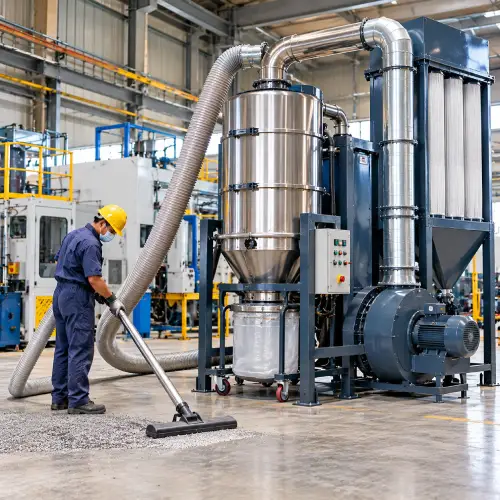
Industrial Vacuum Cleaning Systems are designed for the controlled removal of dust, powders, chips, debris and other process residues from industrial environments. Unlike ordinary cleaning equipment, these systems are engineered for demanding plant conditions where large quantities of waste material need to be collected efficiently from floors, machinery, production areas and difficult-to-reach locations.
DSP Equipment develops industrial vacuum cleaning solutions with attention to the type of material being collected, required suction performance, operating environment and method of waste disposal. The system can be configured around the cleaning requirements of manufacturing plants, workshops, warehouses and process industries.
Key Features of Industrial Vacuum Cleaning Systems
- High-Suction Cleaning Arrangement: Designed to collect accumulated dust and industrial debris efficiently.
- Heavy-Duty Construction: Suitable for demanding operating environments and regular industrial usage.
- Efficient Filtration: Appropriate filtration stages help separate collected particles from the conveying air.
- Large Collection Capacity: Collection arrangements can be selected according to the expected quantity of waste.
- Flexible Hose Connections: Suitable hose and nozzle arrangements allow operators to clean machinery, floors and confined areas.
- Centralised Cleaning Option: Multiple cleaning points can be connected to a common vacuum-generating system.
- Application-Specific Design: Equipment can be configured according to dust characteristics and plant requirements.
What Makes These Systems Different?
Industrial cleaning requirements vary significantly from one facility to another. Fine powder in a pharmaceutical area, metal chips in a fabrication shop and abrasive dust in a mineral-processing plant cannot necessarily be handled using the same vacuum configuration.
DSP Equipment considers the nature of the material, particle size, collection volume, suction distance and working environment while developing an appropriate system arrangement. Where necessary, additional filtration or specialised collection methods can be incorporated into the design.
Performance-Oriented Vacuum Technology
The effectiveness of an industrial vacuum cleaner depends on maintaining an appropriate balance between airflow and suction pressure. A system that is oversized for a particular application can consume unnecessary energy, while an undersized arrangement may struggle with long suction lines or heavy material loads.
Important engineering considerations include:
- Vacuum pressure and airflow requirement
- Blower or vacuum pump selection
- Filter surface area
- Dust-loading characteristics
- Collection vessel capacity
- Suction hose diameter and length
- Operating temperature
- Continuous or intermittent duty
- Material recovery and disposal method
These factors help establish a configuration suited to the actual cleaning workload.
Reliable Filtration & Dust Collection
Filtration is a critical part of an industrial vacuum system because the collected material needs to be separated from the air stream before the cleaned air is discharged.
Depending on the application, the system may incorporate suitable filter elements, filter bags, cartridge filters or other filtration arrangements. The appropriate filtration grade should be selected according to particle characteristics and the required outlet air quality.
For combustible, hazardous or specialised dust, additional design precautions and appropriately rated equipment may be necessary.
Industrial Applications
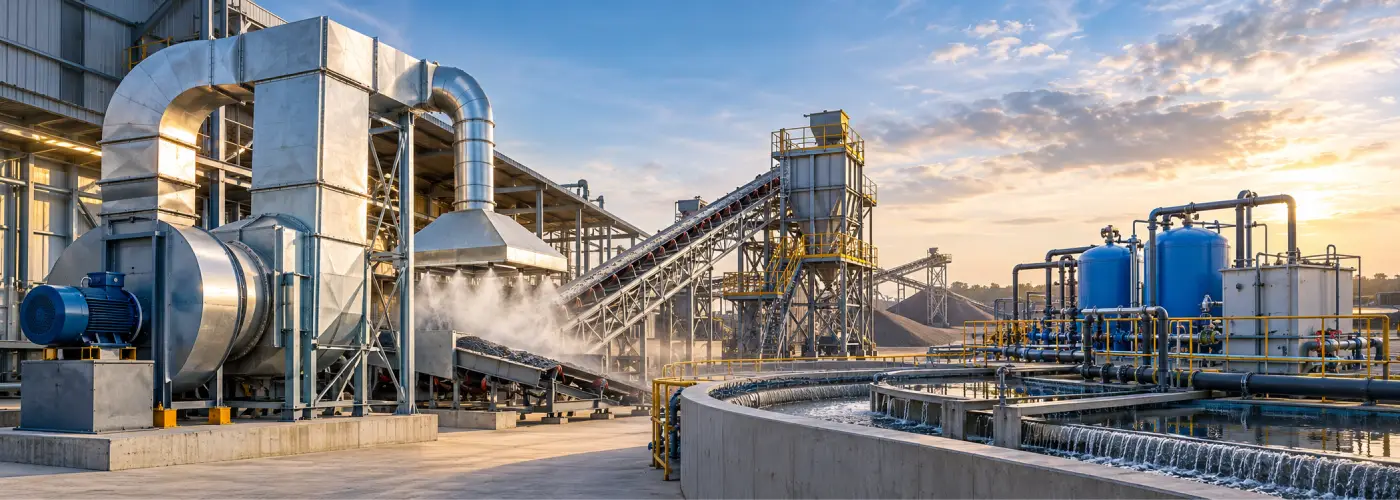
Industrial Vacuum Cleaning Systems can be used across a broad range of working environments.
- Manufacturing Facilities
Useful for removing production debris, dust and residues from machinery, floors and workstations.
- Cement & Mineral Processing
Suitable for collecting accumulated powder and dust around selected processing and material-handling areas.
- Metalworking Units
Can be used for collecting metal chips, filings and other compatible machining residues.
- Food Processing Plants
Appropriate vacuum configurations can assist with the controlled collection of dry food particles and production residues, subject to hygienic requirements.
- Pharmaceutical Industries
Specialised filtration and hygienic construction can be considered where fine powders require controlled collection.
- Chemical Plants
Can support cleaning operations involving compatible powders and process residues after evaluating material safety requirements.
- Warehouses & Logistics Facilities
Useful for maintaining cleaner storage and movement areas where dust and loose material accumulate.
What Makes DSP Equipment a Trusted Name?
Selecting a fire protection system requires careful attention to the actual risks within a facility. A generic equipment package may not address every hazard, so the project should begin with an assessment of the building, processes, combustible materials, water availability and emergency access.
DSP Equipment caters to industrial equipment requirements across Kolkata, Bihar, Jharkhand, Odisha, Chhattisgarh and Assam, helping customers identify the technical considerations involved in selecting suitable fire protection arrangements.
- Requirement-Focused Planning: Identify the risks and protection objectives before determining the equipment configuration.
- System Compatibility: Consider how pumps, piping, alarms and suppression devices work together.
- Industrial Application Awareness: Account for the operational demands of factories, warehouses and process facilities.
- Practical Equipment Selection: Match component specifications to the required application and relevant approvals.
- Maintenance Considerations: Plan for inspections, functional testing and access to critical components.
Applications Across Business Verticals
Fire protection systems serve facilities with different occupancy types, operating conditions and fire hazards.
- Manufacturing Plants: Protection for production areas, machinery and industrial workspaces.
- Warehouses and Logistics Centres: Fire detection and suppression for stored goods and material-handling areas.
- Power and Utility Facilities: Suitable firefighting arrangements for electrical rooms, auxiliary buildings and other identified hazards.
- Chemical and Process Industries: Hazard-specific systems selected according to the materials handled and the potential fire scenarios.
- Commercial Buildings: Integrated alarm, evacuation and firefighting arrangements.
- Hospitals and Healthcare Facilities: Fire safety provisions designed around patient safety, evacuation needs and building regulations.
- Hotels and Institutional Buildings: Detection, alarms and suppression equipment appropriate to the occupancy and building layout.
- Electrical and Control Rooms: Specialised protection selected according to electrical equipment, room conditions and suppression compatibility.
Engineering Components
A complete industrial vacuum arrangement may contain several coordinated components rather than a single vacuum machine.
Component | Function |
Vacuum Blower / Pump | Generates the required suction |
Filter Assembly | Separates collected particles from the air stream |
Collection Hopper | Receives removed material |
Suction Pipeline | Transfers dust and debris toward the collection unit |
Flexible Hose | Provides connection to individual cleaning points |
Cleaning Nozzles | Directs suction toward the target area |
Control Panel | Manages system operation |
Pressure Monitoring | Helps observe vacuum and filter conditions |
Discharge Arrangement | Allows collected waste to be removed safely |
The final equipment combination depends on the cleaning application and the material being handled.
Why Choose DSP Equipment?
DSP Equipment focuses on developing industrial cleaning arrangements around actual plant conditions rather than applying one standard configuration to every requirement.
The selection process can take into account:
- Area and frequency of cleaning
- Material to be collected
- Required suction distance
- Quantity of accumulated waste
- Available electrical and utility connections
- Filtration requirements
- Collection and disposal method
- Available installation space
This approach helps create a vacuum cleaning arrangement that can integrate with the existing industrial environment.
Suitable for Continuous Industrial Cleaning
For plants where dust accumulation occurs throughout the working day, a centralised vacuum system can provide cleaning access at multiple points. Operators can connect a hose to designated suction outlets rather than moving individual cleaning machines throughout the facility.
Such arrangements can be particularly useful in large production areas, where fixed suction lines can reduce the time required to transport cleaning equipment from one section to another.
Maintenance & Operating Considerations
Regular maintenance helps preserve vacuum performance and filtration efficiency. Filter condition, suction hoses, seals, collection containers, blower components and pressure indicators should be inspected according to the operating schedule.
If suction performance begins to decrease, possible causes may include a loaded filter, blocked hose, damaged seal or unsuitable operating condition. Identifying the cause early can help prevent unnecessary stress on the vacuum equipment.
Frequently Asked Questions
Depending on its design, an industrial vacuum system can collect dust, powders, chips, granules and other compatible dry waste materials.
Yes. A centralised arrangement can provide multiple suction points connected to a common vacuum source.
It depends on factors such as suction distance, hose diameter, material characteristics, required airflow and the number of operating points.
Yes, provided the filtration system is correctly selected for the particle size and the required air-cleaning performance.
Yes. Collection vessels and discharge arrangements can be selected according to the expected quantity and type of collected material.
Yes, suitable dry filtration media can be selected for fine particulate, provided the dust loading, temperature, moisture and other process conditions are within the design limits.
DSP Equipment caters to industrial requirements in Kolkata, Bihar, Jharkhand, Odisha, Chhattisgarh and Assam.
Plan an Industrial Vacuum Cleaning Solution
A suitable industrial vacuum system starts with understanding the material that needs to be removed and the areas requiring regular cleaning. Details such as dust type, approximate collection quantity, cleaning area, suction distance and operating hours can help determine the appropriate system configuration. DSP Equipment can evaluate these requirements and develop an industrial vacuum cleaning arrangement suited to the intended application, installation conditions and cleaning workflow.